


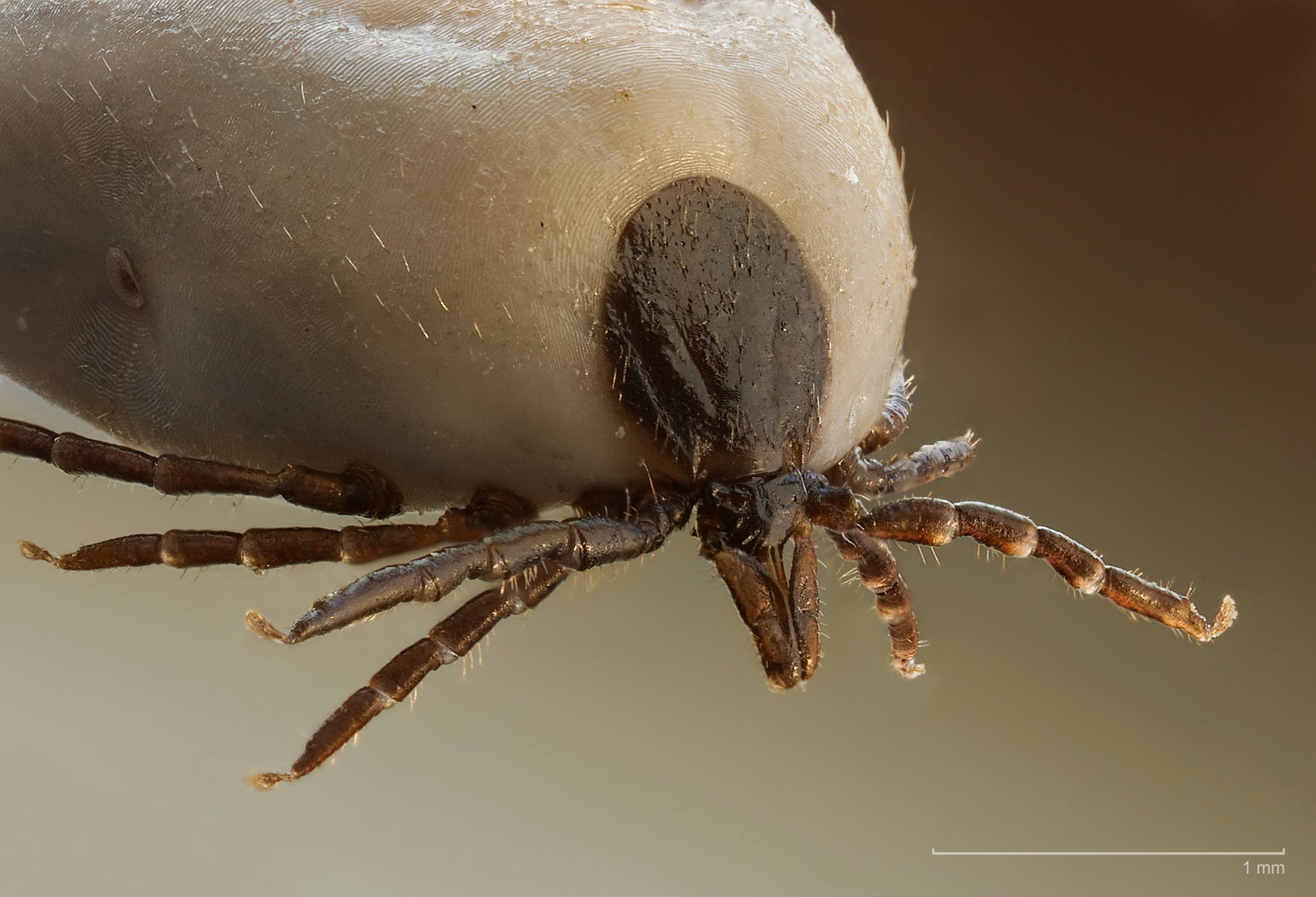
You know, I’m in two minds about these tick-borne diseases that are in the news.
On the one hand, the evidence that they are or could be man-made nightmares, created for the purposes of warfare or getting us all to change our diets and cut our carbon emissions, is pretty compelling.
I mean, the very first cases of Lyme disease were recorded just miles from the US biological weapons facility at Plum Island, in a place called Old Lyme, Connecticut. At the time, the mid-1970s, scientists at Plum Island were researching—yep, you guessed it—the use of ticks as vectors for biological weapons. That kind of research dates back to the Second World War at least, and it’s probable insects were used as weapons in the Korean War; although the US government has always denied It.
And then you have that meat-allergy disease—alpha-gal syndrome, to give it its proper scientific name. Governments, the scientific establishment, NGOs, activists and retarded celebrities are all bombarding us on a daily basis and telling us we have to eat less meat to save the planet; there’s a shady little bioethicist from Princeton who says we should be made allergic to meat so we can’t eat it even if we want to: and then, lo and behold, tens of thousands—maybe hundreds of thousands—of Americans are coming down with alpha-gal syndrome and suffering hideous digestive discomfort every time they eat a sausage or a steak. And so they stop eating meat, of course.
In fact, people are now dying of alpha-gal syndrome. Earlier this month, I reported on the tragic case of a Virginia man who ate a hamburger and died within hours.
He first experienced symptoms while out camping with his family—they had a steak meal that left him in so much pain he told his son he thought he was going to die—and then two weeks later, at a barbecue, he actually did die. Post-mortem testing showed he had been sensitized to alpha-gal, and his wife confirmed her husband had suffered multiple tick bites over the summer. Alpha-gal syndrome is mainly transmitted by the lone-star tick, so called because it has a mark on its back that looks like a single star.
As I reported over the weekend, a second case of death-by-meat-allergy has now been reported, this time in Australia.
Coincidences really do exist. Not everything that could be connected is. But still, events of the last four years have made me think twice about coincidences. As a rule of thumb, when there’s a disease outbreak within spitting distance of a high-security biological lab that exists to study the exact same type of disease, I’m more inclined to believe there might be a link. But that’s just me.
On the other hand there’s strong evidence these diseases have a natural origin. Studies of museum tick samples have shown Lyme disease was around as early as the 1890s in the US, and genetic research has pushed the European origin of the disease back thousands of years. Whistleblowers from Plum Island and Fort Detrick have also recanted testimony about their activities at the labs—testimony that, in any case, was never made publicly and can’t be independently verified.
Likewise, when it comes to alpha-gal syndrome, there are verified cases of people suffering the disease in the US in the 1990s, and in Australia, cases of mysterious meat allergies go back decades further.
None of this disproves the theory a human hand is to blame for the spread of these diseases, though. These diseases could have a natural origin stretching thousands of years into the past and still have been engineered to be more infectious, or simply seeded in the environment through lab leaks or more deliberate methods.
So like I said, I’m in two minds about these diseases.
One thing I’m more certain about is that research on tick-borne diseases is really bloody dangerous, and if there’s research underway to make such diseases even more unpleasant—gain-of-function research—it should be stopped. Right now.
Big surprise: That’s exactly what’s happening.
The Gateway Pundit has just released a report on research into a tick-borne disease called Crimean-Congo hemorrhagic fever (CCHF). The name alone is giving me a temperature. The virus, which spreads among livestock but also can spread to and between humans, has a mortality rate of up to 40%, but thankfully it’s never been found in the US. Until now.
