


Enter the men who fear women. Or is it the women who fear men?
“The men who fear women”: That’s the title of Helen Lewis’s latest cover story for The Atlantic. It’s currently making a big splash as she travels the podcast and interview circuit—PBS, The New York Times, NPR—explaining what she calls “masculinism,” a movement that apparently wants to put women back in the kitchen where they belong, having stripped them of all their political rights.
Sounds scary, huh? As the title suggests, though, it isn’t the women who are scared (although perhaps they should be)—it’s the men.
You may remember Helen Lewis from her car-crash interview with Jordan Peterson for GQ, way back in 2018. She was the one who really got up the good professor’s nose, needling and poking and making him look like a sulky teenager sitting atop a huge pile of mess in a fusty, darkened bedroom—the precise demographic Peterson arrived on the scene to rescue from its own retarded development and the scorn of polite society. In hindsight, although Peterson’s star would continue to grow, that interview was probably the beginning of the end for him, revealing the limitations of his philosophy and the personality behind it. Most of all, Lewis goaded Peterson into showing the true extent of his fragility: the brittleness that, in time, would make it impossible for him to continue in his valuable role as surrogate father to an entire generation of angry, confused, demoralised young men.
So what is “masculinism”? Wilson describes it as a “movement to fight back against the advances of feminism and reassert the primacy of men.” There are religious “masculinists”—not just Christian, but also Muslim—and there are secular “masculinists.” For Lewis, the religious masculinists are exemplified by a guy called Doug Wilson, an evangelical pastor whose self-created denomination has 170 churches US-wide and counts Secretary of War Pete Hegseth among its members. Wilson even led a prayer service at the Pentagon in February.
“Wilson believes that women should ‘not ordinarily’ hold political office,” Lewis writes, “and should never serve in combat roles in the military.
“Husbands should have dominion over misbehaving wives’ weight, spending habits and choice of television programs.”
The Nineteenth Amendment would be repealed, and voting would take place “the same way we do it in our church structure… by household,” Wilson told her.
Wilson has choice words for every shade of woman he doesn’t like. They’re “small-breasted biddies,” “harridans,” “lumberjack dykes, “Jezebels.” Gloria Steinem and another prominent feminist are “a couple of cunts.” Indeed, Wilson’s “twinkly, avuncular” persona one-on-one, in the flesh, is rather different from his public and especially his online persona, Lewis notes. In public life, Wilson’s “performative trollishness”—she uses the pro-wrestling term “kayfabe” to describe it—has one aim: “He wants feminists like me to get angry with his most outlandish proposals, making ourselves look like scolds or Chicken Littles in the process,” thereby proving his point about the unsuitability of women for front-facing roles in society. Clever game.
But Lewis notes that, despite the kayfabe, Wilson is deadly serious. He would repeal the 19th Amendment, given the chance.
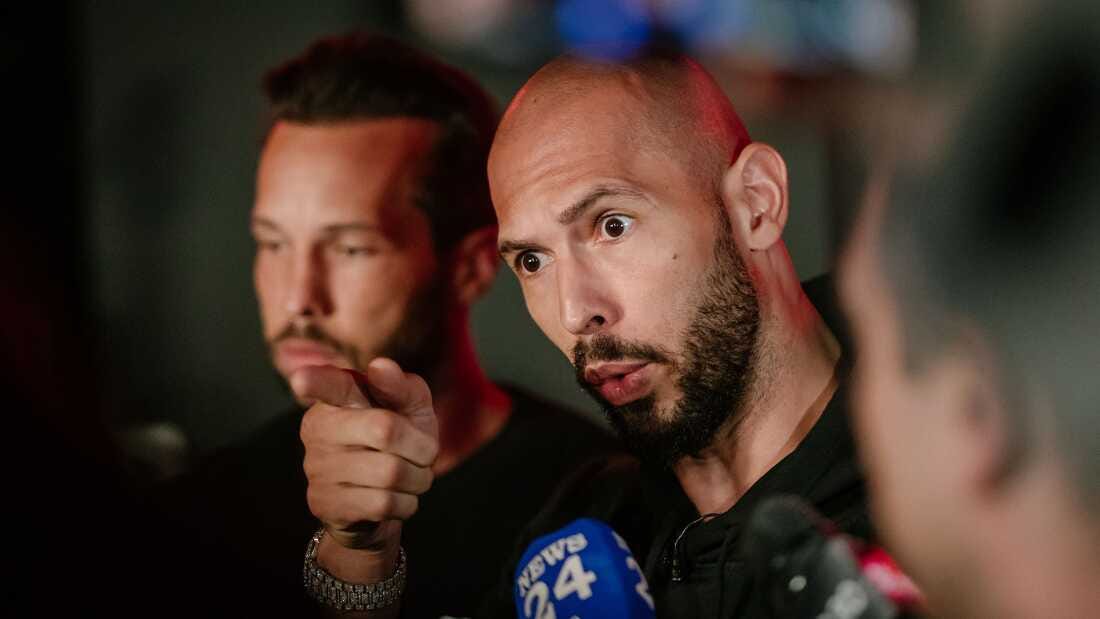
Wilson, as I say, is the archetype of the Christian brand of “masculinism.” But there’s also the influencers Andrew Tate and Sneako, Nicholas J. Fuentes, another pastor called Joel Webbon—and there’s me. She calls me an influencer “albeit one who knows a lot of $10 words.” There’s even a woman, Helen Andrews, who I’ll get back to in a moment.
When I spoke to Lewis at the beginning of the year, I was in Washington promoting my new book The Last Men: Liberalism and the Death of Masculinity. I must say, I thought she’d mellowed considerably since I’d last seen her, baiting Jordan Peterson like a scene from a seventeenth-century woodcut. It was clear she’d read my book closely, or so it seemed, and her comments and questions were smart and incisive—and not entirely unsympathetic either. She even complimented my striped dressing gown (it was early and I was still in bed); although she described it as a set of pyjamas in the final piece. If you’ve been following my work, you’ll know I’m not a fan of pyjamas, or any item of clothing that risks overheating the testes, compromising hormone production and fertility.
Still, I knew that I would not get an easy ride. And, of course, I didn’t. Apart from the “$10-dollar words” quip, there’s much Lewis gets wrong in point of fact about my new book. She says the argument, about testosterone decline and the draining of masculinity, is directed against “elites.”
“He lays the blame at the feet of the elites,” she says.
“They are keeping you fat; they are unhappy with risk taking and hierarchy; they are calling masculinity toxic.”
Either Lewis didn’t read the book as closely as I thought she did, or she’s trying to fit me and my work into a theoretical straitjacket that’s a few sizes too small. The argument of my book is not about elites vs the people. It’s about liberal democracy as a political system, and what is and isn’t possible within the confines of that system. Nobody designed that system, and nobody is in control of it. I certainly don’t believe there’s a shadowy cabal of people with a checklist of things to do to “destroy masculinity,” like making men fat and useless and discouraging the forms of risk-taking necessary for boys to develop into fully fledged men. In my chapter on the “gay frogs conspiracy theory”—“they’re putting chemicals in the water that turn the friggin’ frogs gay”—I explicitly reject the notion that social engineers are polluting the food and water supply with gender-bending chemicals, even though there is evidence that companies like DuPont and 3M hid toxicity data about “safe” chemicals from regulators for decades, causing enormous harm.
But that doesn’t mean powerful individuals, like Stephen Colbert or Joy Behar, don’t use tropes like “toxic masculinity” or calling all forms of male association “gay” to pursue their own ends; and the baleful state of the average man does indeed tend towards the maintenance of the status quo, which is one of the main reasons nothing much is done to help men.
It’s also wrong to say, as she does, that my focus is on feminism. My focus is on liberal democracy, which predates and encompasses feminism.
What Lewis wants, most of all, is for masculinism to be an actual thing, a coherent movement—because otherwise what would be the point of writing a 3,000-word piece for The Atlantic? If masculinism is just an odds-and-sods collection of dudes with retrograde views about women that you, as a modern liberated woman, don’t like, so what? Those five full spreads could be better filled with a piece about President Zelensky or trans kids.
The key to “masculinism,” Lewis claims, is that it provides a kind of unifying ideology for MAGA, which would otherwise lack one.
