


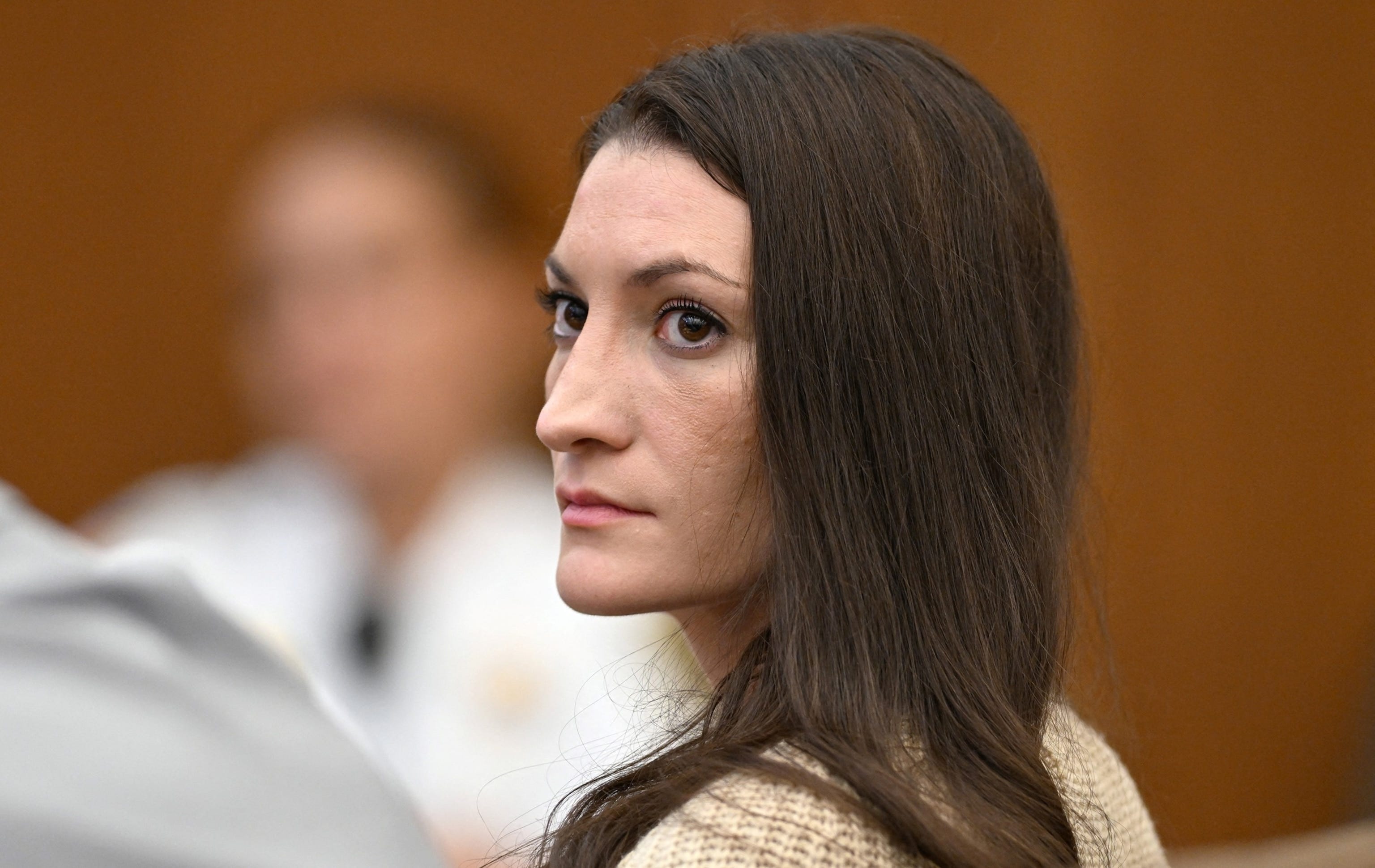
Inside the Plymouth courtroom, there’s agreement: Lindsay Clancy killed her three children. What’s at issue isn’t the basic facts, what Clancy did and didn’t do. She’s freely admitted to killing Cora (5), Dawson (3) and Callan (8 months) Clancy.The M
Lindsay Clancy doesn’t dispute that on the evening of January 24th 2023, after she asked her husband, Patrick, to fetch takeout food and some medication from the local pharmacy, she strangled the children in the basement of the family home in Duxbury, Massachusetts, using a set of exercise bands, then attempted to commit suicide by slitting her wrists and jumping from a second-story window. When her husband returned, he found her outside, still alive, called 911 and then discovered the children downstairs.
The call is so harrowing the judge refused to release the audio to the general public.
What’s at issue, rather, is a second-order moral question: Was Lindsay Clancy responsible for the killings? Was it murder—deliberate, premeditated—as the prosecution alleges; or did Lindsay suffer from severe postpartum psychosis, auditory command hallucinations—voices in her head telling her to kill—and massive overmedication of prescription drugs, as the defence claims in mitigation?
There’s compelling evidence on both sides. This is a genuine moral conundrum, one that admits no easy answers. There’s clear evidence of malice aforethought. Before the killings, Clancy made repeated internet searches asking questions like “how to slit throat to die,” “Where is the carotid artery?” “How to turn airbags off on Kia Sorrento?” and “Can you treat a sociopath?” Other digital evidence, including Apple Watch and phone data, suggest she acted in a rational manner: She created an opportunity to have her husband out of the house so she could kill the children. But it’s also hard if not impossible to dispute that Clancy was of anything but sound mind in the months, weeks and days leading up to the tragedy. She also Googled “hallucinations,” “intrusive”—meaning “intrusive thoughts”—“psychosis,” and “postpartum depression,” and she tried to find out information about the various drugs she had been prescribed, which included anti-anxiety drugs, SSRI anti-depressants and a powerful antipsychotic called Seroquel with a worrying array of side effects. Clancy’s personal journals describe deepening anxiety, panic attacks, emotional numbness, murderous thoughts and suicidal ideation after starting Seroquel. She had repeatedly sought psychiatric help and even been hospitalised weeks before the killings. She and her husband—now ex-husband—have both filed malpractice and wrongful-death lawsuits against her medical providers, alleging she was improperly diagnosed and prescribed drugs that made her condition worse.
Here isn’t the place to go over all the evidence for Lindsay Clancy’s guilt, or to consider the complex issues involved in attributing blame, especially to those under the influence of powerful drugs and with a history of serious mental illness. I have my opinions, of course, about a woman who would strangle her own children to death and whether such a crime could ever be mitigated by circumstance. My interest here is in the public reaction to events, and what it says about the American public today, and American women in particular.
The trial has generated a media circus, and by that I mean a social-media circus. While the basic facts of the Clancy case are agreed by both prosecution and defence inside the courtroom, outside everything is up for grabs. Wild theories are circulating, calling the trial a sham and a coverup. Despite admitting her guilt, Lindsay Clancy did not in actual fact kill her children. She was framed. Her husband pushed her out of the window after strangling the children himself. He was the voice she heard in her head, telling her to kill, only he was whispering in her ear. He did it so he could start over with his new wife, a fertility doctor in New York. I know a narcissist when I see one.
These claims aren’t fringe claims. They’re each garnering tens and hundreds of thousands of views, likes and shares—millions, cumulatively. Patrick Clancy and his new wife have been attacked directly, with leaks of personal information and death threats. For the most part, though, the theories have simply done the rounds online, as such theories do, and they’ve created a thick fug of suspicion over a man who has never been suspected of wrongdoing, at least not from prosecutors anyway.
