


Testosterone: “the aggression hormone.”
When legendary film director James Cameron called testosterone “a toxin that you have to slowly work out of your system,” he was simply repeating what we’ve come to accept as a truism about the master male hormone. Testosterone makes men aggressive. In fact, it’s responsible for all the regressive behaviour we’re now supposed to associate with traditional forms of masculinity—so-called “toxic masculinity”—and we’d be far better off if there was less of it all round. Men would be much nicer, and maybe we’d finally have world peace and a female president of the United States.
The reality is rather more complicated than that. The science of hormones is not so simple. As we’re coming to understand more and more, the “female” hormone estrogen plays a key role in aggression in animals and humans. In a study I never tire of discussing, male macaques had soy isoflavones added to their diet—plant compounds that mimic estrogen—and their behaviour changed in very interesting ways. Macaques are social animals, but these ones withdrew from the rest of the troop and became more submissive on the rarer occasions they interacted with their fellow simians. At the same time, however, the number of aggressive incidents rose dramatically.
Shy, submissive—but also nasty, sneaky and vicious. What a combination.
I often describe these unfortunate macaques as “incel monkeys,” not least of all because there are clear parallels with human behaviour, as modulated by estrogen.
A new decade-long study, this time of fish, builds on what we know about the role of estrogen in modulating aggression. It also raises worrying questions about the growing pollution of the environment and our bodies by chemicals that mimic the hormone. These chemicals have been linked to more or less every chronic disease in the Developed World and to a precipitous decline in fertility markers, especially sperm counts. One expert, Professor Shanna Swan, believes natural reproduction could become impossible in less than a generation if sperm counts continue to fall like they are—a scenario that’s often dubbed “Spermageddon.”
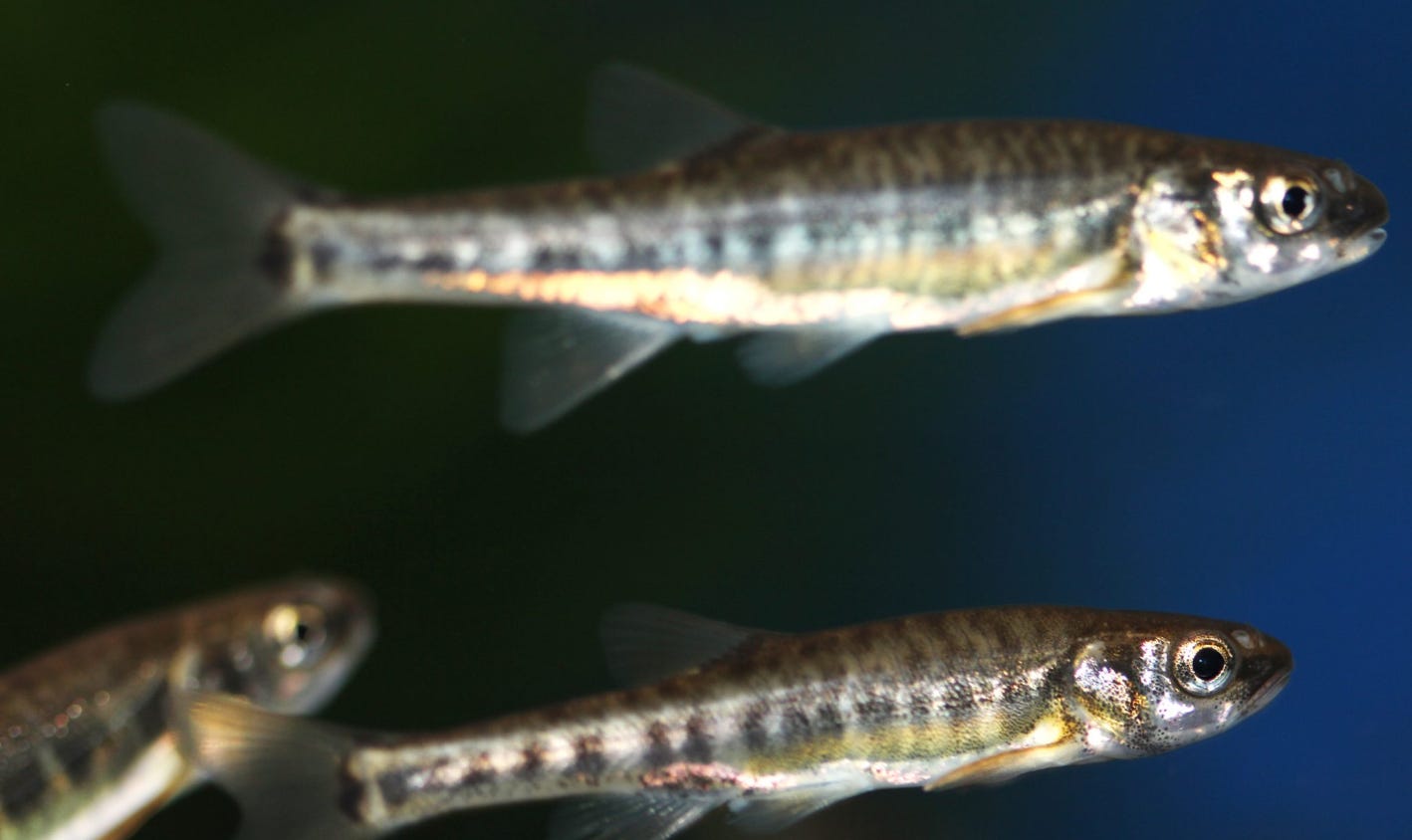
Scientists in Canada added a synthetic form of estrogen (EE2) that’s commonly used in birth-control pills to a small lake over a period of three years. They expected the male fish in the lake would become passive—feminised—but instead something else happened. The male fish became wildly aggressive. Rather than guarding their nests full of eggs, they abandoned them to chase other fish nearby. In the third year, the population of fish within the lake suffered a catastrophic collapse. The nests stopped being properly cared for and eggs began disappearing. The male fish themselves lost physical features associated with sexual selection and attracting a mate, which made them less likely to reproduce.
Three lakes reserved for special scientific research were used: one to which the synthetic estrogen was added in increasing amounts, and two more that were used as controls for comparison. The total amount of estrogen added to the main lake was between 5 and 6 nanograms per litre, which is a concentration regularly found in rivers and lakes worldwide. This is important, because it means the experiment was realistic, simulating conditions that are now common because of widespread pollution by natural and synthetic forms of estrogen like birth control, but also plastic chemicals, strain-resistant coatings, fire retardants, pharmaceuticals, personal-care products and even compounds found in sunscreen.
Snorkelers filmed interactions among the fish in the three lakes. Hundreds of videos were analysed for the amount of time each male spent guarding his nest, how many times he chased other fish away from the nest, and how many other fish were in close proximity to it. The videos were randomised so viewers had no idea which lake the footage came from. The researchers collected nests and counted eggs using a microscope, and also examined male fish taken from the lakes, with an eye in particular to the nuptial tubercles and fat pad on their backs they use to clean eggs in the nest.
As I mentioned earlier, the researchers were surprised by their findings. Under controlled conditions in a laboratory, male minnows exposed to EE2 became less aggressive; although like their counterparts in the lake, they ended up suffering serious reproductive effects. The male lab fish also spent less time guarding their nests and fertilising fewer eggs.
So why the difference? Why the aggression?
