



Welcome to REN’s roundup, a blast featuring some of the most important stories I’ve been reporting on this weekend.
Each Sunday, I’ll give you five full stories covering everything from the latest developments in MAHA-world to events in the Middle East. The roundup is free to read, but if you like it and you like the rest of the content on In the Raw, please consider subscribing. For the cost of a couple of boxes of eggs a month, you’ll get access to exclusive essays, fitness guides and nutritional advice, podcast episodes and much more. You’ll also have my eternal gratitude, and who knows when and how that might come in handy…
Treasury Report: US Sanctions “Decimating” Iran’s Economy
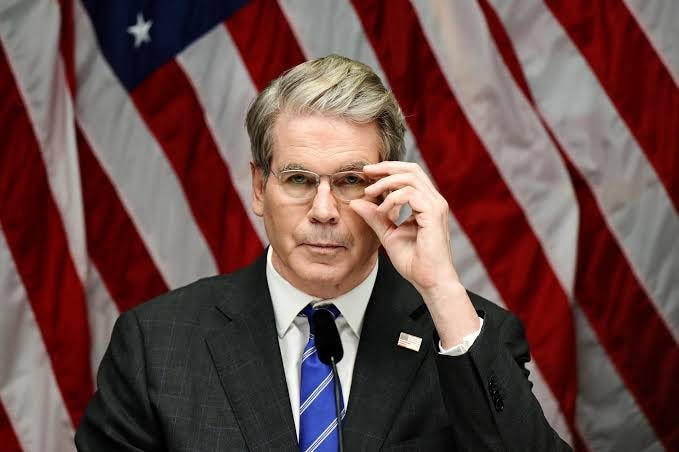
US economic sanctions, combined with the ongoing blockade of the Strait of Hormuz, are “decimating” the economy of Iran, according to a Treasury report.
Operation Economic Outcast was launched at the end of August, as a new strategy to force Iran to capitulate through economic pressure rather than military action.
In an appearance on CNBC on Wednesday, Treasury Secretary Scott Bessent said the Operation has been “very successful.”
His appearance was followed on Friday by a report that discusses the Operation’s effects in detail.
The report says headline inflation in Iran—the overall increase in all good and services—is now at 90%.
“As the rial loses value and Iran’s access to international markets narrows, inflation is placing additional pressure on Iran’s already strained economy,” the report states.
“Rising prices are eroding purchasing power and increasing the cost of basic goods, while making it more expensive for Iran to obtain goods and inputs from abroad.”
The report also states that the naval blockade is having serious effects on Iran’s ability to move oil through the Strait of Hormuz.
Iran has not loaded any oil onto vessels since 25 August, the day after Secretary Bessent announced Operation Economic Outcast.
Iran now has “nothing” after selling all its oil that was already at sea.
The Trump administration has also been pursuing “alternative channels” Iran has been using to move money and avoid sanctions.
“By identifying and disrupting cryptocurrency exchanges, wallets, financial facilitators, and other digital-asset infrastructure used to circumvent sanctions, Treasury is making it increasingly difficult for the regime to replace traditional financial channels with new ones,” the report states.
The Treasury has sanctioned banks, including in Turkey and the United Arab Emirates, that have been used to transfer Iranian oil revenues.
Iran promised a “devastating response” to the sanctions, but so far none has been forthcoming.
Major General Ali Abdollahi, the chief of staff of Iran’s military, told state media that Iran would launch “revolutionary, crushing, regret-inducing, and devastating responses” to American attempts to increase economic pressure on the Islamic regime.
He said Iran’s military forces “maintain comprehensive, smart, and up-to-date readiness across all domains, including land, sea, air, air defense, space, and cyberspace.”
President Trump hailed Operation Economic Outcast as “the MOST CRUSHING ECONOMIC OPERATION EVER TAKEN AGAINST ANY COUNTRY!”
Ukraine Continues To Hit Russian Oil Facilities, Moscow Accuses Kyiv of Ignoring Trump Request

Ukraine struck a major Russian oil facility on Friday, leading Moscow to accuse Kyiv of ignoring President Trump’s repeated requests to halt such attacks. A further attack on another refinery took place today.
The Novokuibyshevsk oil refinery in the Samara region was targeted on Friday by Ukrainian FP-1 long-range drones, according to Ukrainian weapons manufacturer Fire Point.
“Numerous hits were recorded on the plant’s territory. In particular, one of the units hit is a diesel fuel hydrotreating unit,” Fire Point said in a post on Telegram.
Footage posted online showed the aftermath of the attack on the facility.
Russia said the attack caused only “slight damage,” but also accused Ukraine of ignoring President Trump’s request to halt attacks on oil refineries.
Kremlin aide Yuri Ushakov said Ukraine was “simply ignoring” Trump.
“They are not complying.”
He added that Ukraine was doing so with European backing.
Overnight the Kstovo refinery, owned by Russian oil giant Lukoil, was hit by a swarm of drones.
So far, the Trump administration has not responded to the attacks.
On 11 October, President Trump announced an “ENERGY CEASEFIRE” and claimed “both parties have agreed” to it.
“Do not break it!” he warned.
Russia however, did not confirm the agreement, and Ukraine said it would continue long-range strikes against Russia if it refused to accept.
Soon after, President Zelensky accused Russia of attacking energy and civilian infrastructure with dozens of missiles and hundreds of drones.
Earlier this week, the leaders of Finland and Norway spoke with President Putin. Their stance had previously been to avoid all contact with Russia.
The Epoch Times reports, “Finnish President Alexander Stubb and Norwegian Prime Minister Jonas Gahr Store initiated the conversation with Putin to discuss future negotiations to help end the war, according to a joint statement.”
Trilateral negotiations between Ukraine and Russia, mediated by the US, are set to take place this month.
Ultraprocessed Foods Might Rewire Children’s Brains To Make Them Eat More
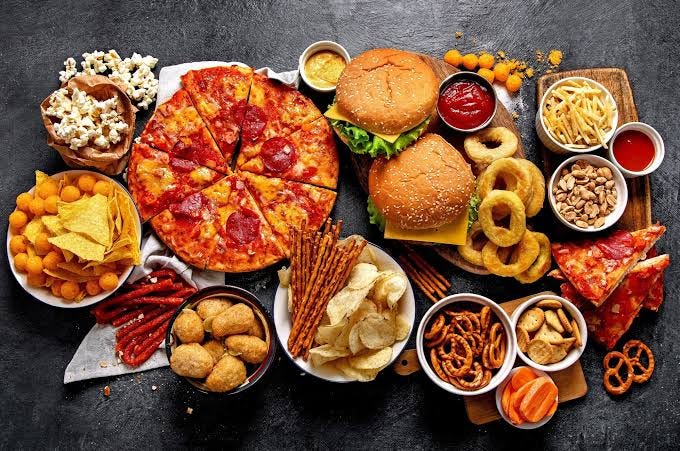
Ultraprocessed foods appear to rewire children’s brains, making them crave more, according to a new scientific study.
The new research, published in JAMA Network Open, reveals that children who eat more ultraprocessed food have stronger brain reactions to images of junk food.
“Children’s brains are still developing, habits are still forming and food preferences are still being made,” said senior researcher Dr. Kathleen Page, a professor of medicine and pediatrics at the Keck School of Medicine of USC.
“It’s an important period where the brain is very sensitive to food and the food environment.”
On average, US children now derive about two-thirds of their daily calories from ultraprocessed foods.
Health Secretary Robert F. Kennedy Jr. has made ultraprocessed foods one of the main targets of his Make America Healthy Again crusade, in response to a wealth of research that links ultraprocessed foods, and their ingredients, to chronic diseases like diabetes, obesity, digestive issues and behavioural conditions like autism.
Researchers collected MRI scans of 46 children as they viewed images of ultraprocessed foods, as well as gathering data on their diet, body-fat percentage, waist circumference and body-mass index (BMI).
The result showed that children who ate more ultraprocessed food had more powerful responses to the images in the dorsal striatum, a brain region involved in reward and motivation.
Stronger responses were also associated with increases in BMI and higher body fat one year later.
Children who ate more ultraprocessed food had larger waists, higher BMI and more body fat by the end of the study.
The researchers were able to show that the brain response was the strongest association among factors.
“This study goes beyond just understanding that UPFs affect weight gain,” Page said.
“It actually gives us insight into the neurobiological underpinnings by which these foods may be linked to body composition over time.”
Appeals Court Blocks DoJ Attempt To Stop Counting of 20,000 California Ballots
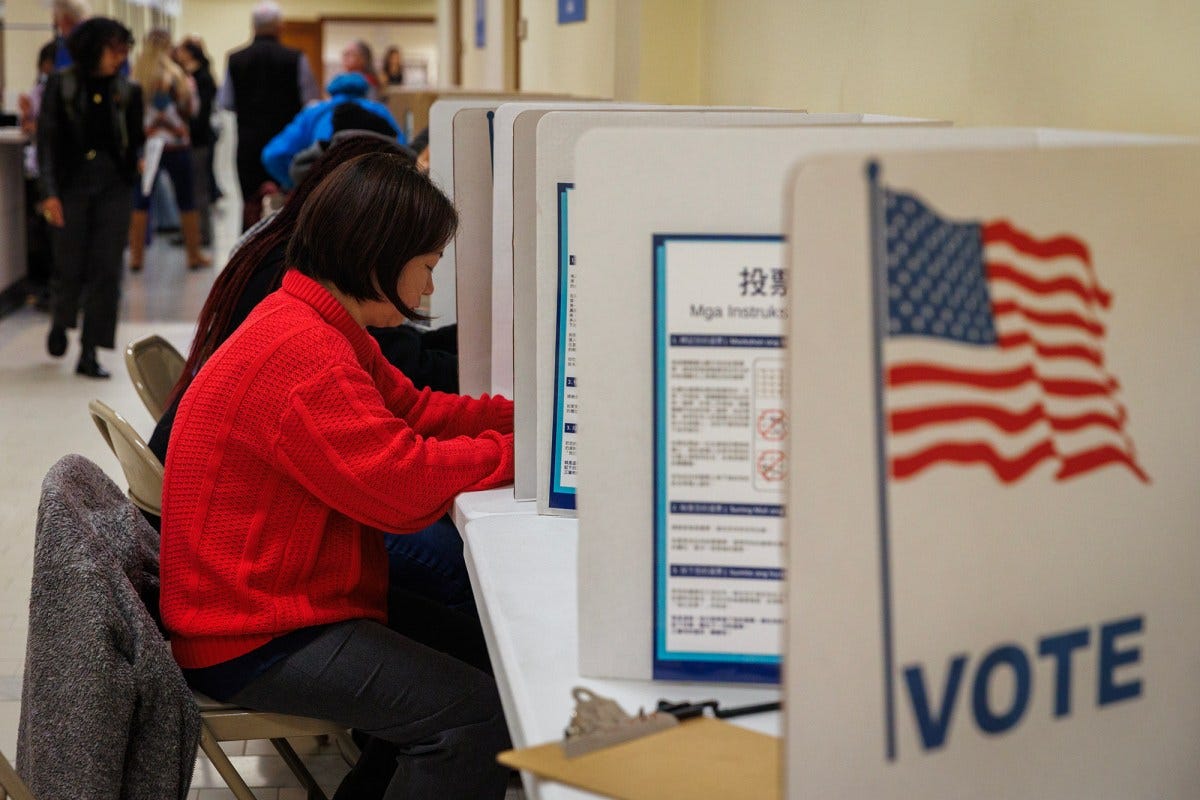
An appeals court has rejected the Trump administration’s request to stop California from counting 20,000 ballots it alleges may have been cast by non-citizens.
The Court of Appeals for the Ninth Circuit ruled 2-1 to decline the administration’s “invitation to contravene the Elections Clause by undermining the Constitution’s plain text.
“If the United States believes different procedures are necessary for vote-by-mail ballots, we believe it should take that suggestion to Congress, not the courts,” the ruling stated.
The request had already been denied by a district court, which decided the Department of Justice’s (DoJ) request could disenfranchise citizens if enforced,
The Court of Appeals agreed with the earlier ruling: “As the district court found—and we discern no clear error— there is no feasible way to identify and segregate the ballots of specific individuals without potentially catastrophic effects on the entire system.”
The DoJ identified around 20,000 probable noncitizens who received mail-in ballots in California and asked state officials to review the list of names within 48 hours.
When the state refused, the DoJ sued, in a bid to prevent the ballots being counted until the citizenship status of the voters could be confirmed.
“California election officials were given an opportunity to remove noncitizens from their voter rolls and to sequester ballots returned from suspected ineligible voters. They refused,” said Essayli.
The DoJ claims that once the ballots have been counted, there will be no way to separate them from the legitimate votes of US citizens.
The dispute with California is part of a wider Trump push to prevent noncitizens from voting in federal elections.
Recently, a judge blocked the DoJ’s attempt to check voter rolls against a federal immigration database.
In a 78-page decision, Judge Sparkle Sooknanan—a Biden-appointee—said the DoJ had downplayed the risk that its attempts to combat voter fraud could disenfranchise US citizens.
“The challenged policy represents the federal government’s attempt to decide who gets to vote. But Congress has left that authority where our Constitution has always placed it: with the states,” she wrote.
The case concerns the so-called SAVE database, which contains details of the immigration status of individuals in the US.
In June, in a separate case, Judge Sooknanan blocked the Trump admin from using the database to check the accuracy of voter rolls.
That decision was temporarily paused by the Supreme Court last month.
The Trump administration has made voter fraud a key priority.
Last year, President Trump ordered the DoJ to crack down on voter fraud, which led the Department to demand unredacted voter rolls from almost all 50 states. Voter rolls include sensitive data like Social Security numbers.
Eighteen Republican-led states complied, and the voter-roll data was cross-checked with the SAVE database to allow ineligible voters to be removed.
The DoJ has sued 30 states that have so far refused to hand over their data. It has lost 26 cases so far without a single victory.
Scientists Inject Human with AI-created Virus for First Time
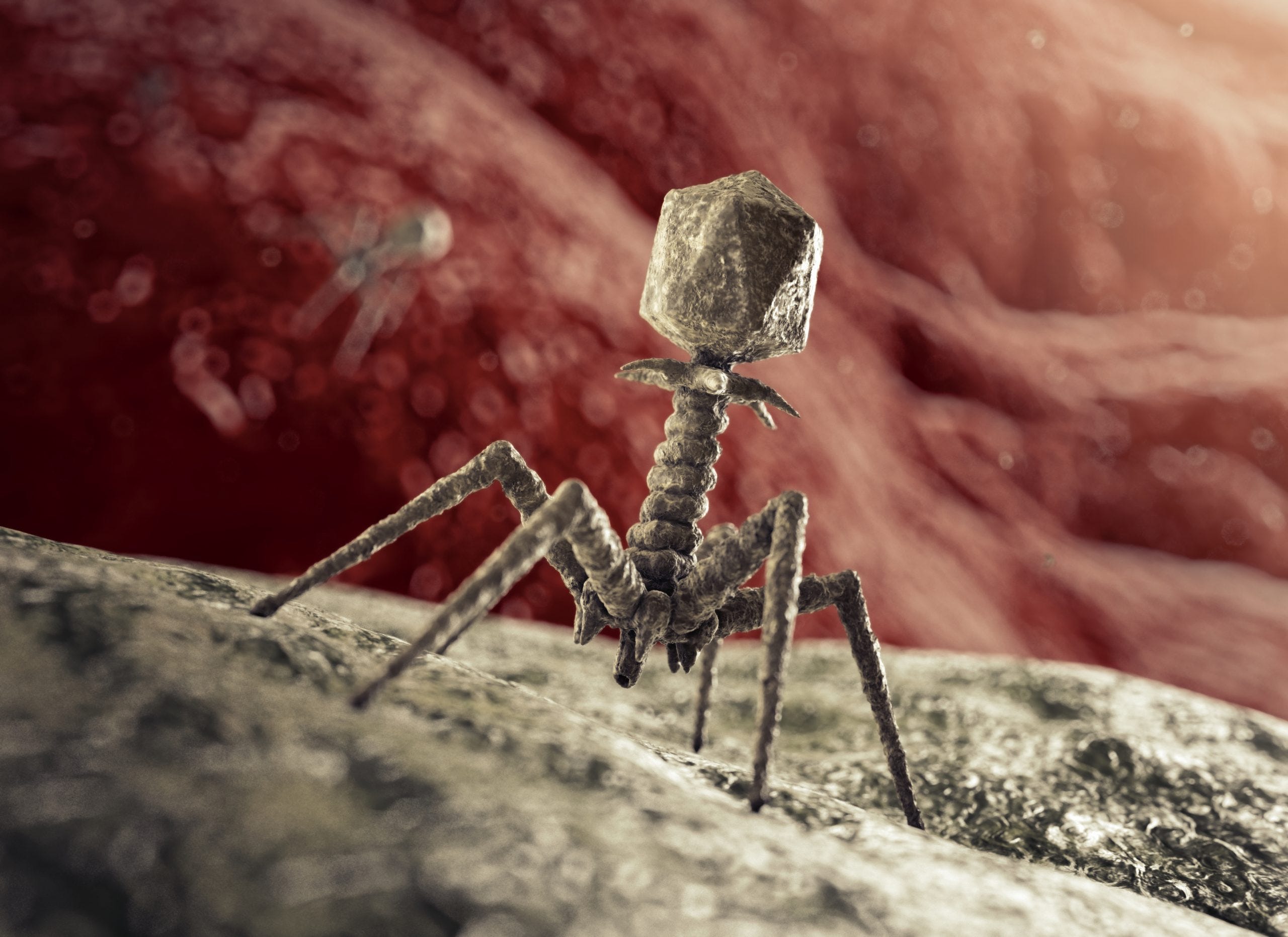
Scientists have injected a human with a virus designed by AI for the first time ever.
The experiment is part of an attempt to find ways to fight antibiotic-resistant microbes that resist traditional forms of treatment.
A California-based startup called Radical Numerics injected a patient with viruses created by its AI model, Omnii-1. The patient was suffering from a serious bacterial infection.
The AI model designs bacteriophages, a special kind of virus that infects and kills bacteria without targeting human cells.
Bacteriophages are already used as an experimental treatment for serious bacterial infections, but this is the first time a bacteriophage designed entirely by AI has been used.
Instead of searching for a bacteriophage that could target the bacteria causing the patient’s infection, Omnii-1 designed one from scratch.
The company says the entire process of design and treatment could eventually take only a matter of days.
The treatment was delivered through a special program that allows experimental treatments to be tried when other options are limited.
The Independent reports, “Radical Numerics said this was the first time AI-designed phages had been used to treat a human patient. The announcement was published on the company’s website but has not been confirmed in a peer-reviewed study, and the company has not said whether the treatment helped the patient.”
So far, the company has released no details about the patient’s diagnosis or the success of the treatment.
The use of AI to develop new medical treatments has been greeted with both excitement and apprehension.
In August, researchers announced they had used AI to create new viruses that could target harmful bacteria.
Researchers have also warned that AI could be used to generate new pathogens that target humans—biological weapons.
"Operation Economic Outcast was launched at the end of August, as a new strategy to force Iran to capitulate through economic pressure rather than military action.
In an appearance on CNBC on Wednesday, Treasury Secretary Scott Bessent said the Operation has been “very successful.”"
It always seems to fall to me to be the one to ask who peed in the pool: if the operation is so successful why haven't they capitulated? We claim to control the Strait of Hormuz, yet attacks on shipping continue. We claim to have "decimated" their military, yet they and their proxies continue to attack our bases in the region. Something isn't adding up. I'm no one with any influence, but the administration should have finished Iran militarily much sooner. It's lovely if Mr. Trump wants to leave something substantive intact for the Iranian people when this is over, but it is a mistake failing to eradicate this menace once and for all. Ukraine is Europe's mess, and it's a distraction from the greater danger.