Passive-aggressive Incel Monkeys
Why testosterone isn't the aggression hormone we're told
Welcome to the start of a new series of essays expanding on topics introduced in my new book, The Last Men: Liberalism and the Death of Masculinity. Each week I’m going to pick a topic from the book and write an essay. You’ll find them all under the tab “The Last Men” on the homepage. None of these essays will be paywalled initially. There will be a special paid chat for readers to discuss the essays and the book.
Testosterone: “the aggression hormone.”
I’m sure you’ve heard that before.
In an interview with The Hollywood Reporter in 2022, director James Cameron described his younger self as a “wild, testosterone-poisoned young man,” and testosterone as “a toxin that you have to slowly work out of your system.” There’s an irony, of course, to hearing these words from the director of quite a few testosterone-fuelled films—The Terminator, Aliens, The Abyss—but Cameron wasn’t saying anything out of step with the broader culture: with TV and Hollywood, pop science and education, newspaper opinion pieces and all the rest of it.
Testosterone—“the aggression hormone”—is something we’d all be better off without, or certainly with much less of it bouncing around in our veins, assuming we want to live in a more tolerant, more peaceful society.
And we all want to live in a more tolerant, more peaceful society, right?
Of course, the reality is rather more complicated than that.
Testosterone is made a proxy for masculinity as a whole, a kind of synecdoche, and we live in a society that is profoundly anti-masculine or gynocentric in its orientation. But aggression—the defining characteristic of men, or so we’re told—isn’t just caused by testosterone. In fact, aggression is as much a product of estrogen, the “female hormone,” as the “‘male hormone,” testosterone. That’s right: The hormone we’re told is all sweetness and light and makes women angelic and caring and the opposite of “testosterone-poisoned” young men, may actually be responsible for violence and bloodshed too.
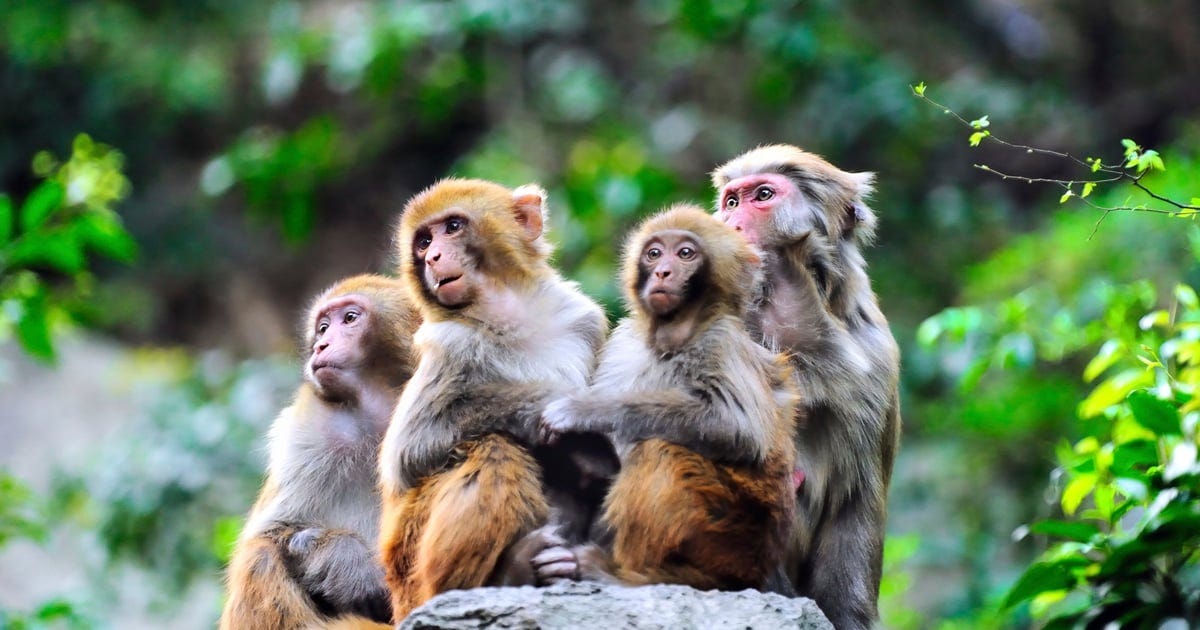
One of my favourite studies in my new book, The Last Men: Liberalism and the Death of Masculinity, is the one I like to call the “incel-monkey study.” It’s an intervention study in which male macaques—a species of monkey—had food that mimics estrogen added to their diets for over a year and their behaviour was observed.
The food in question was soy isoflavones, proteins found in soy products, including soymilk. Compounds that mimic estrogen are generally referred to as xenoestrogens or phytoestrogens if they come from plants specifically. Hops, added to beer to flavour and preserve it, are another common example of a phytoestrogen.
The paper’s full title is “Increased aggressive behaviour and decreased affiliative behaviour in adult male monkeys after long-term consumption of diets rich in soy isoflavones;” the journal, Hormones and Behaviour, from 2004.
Here are the protocols of the experiment:
“We studied the effects of long-term (15 months) consumption of diets rich in soy isoflavones on spontaneous social behavior among adult male cynomolgus macaques (Macaca fascicularis) (n = 44) living in nine stable social groups. There were three experimental conditions which differed only by the source of dietary protein: casein and lactalbumin (no isoflavones), soy protein isolate containing 0.94 mg isoflavones/g protein, and soy protein isolate containing 1.88 mg isoflavones/g protein.”
And here’s what the researchers found:
“In the monkeys fed the higher amount of isoflavones, frequencies of intense aggressive (67 percent higher) and submissive (203 percent higher) behavior were elevated relative to monkeys fed the control diet... In addition, the proportion of time spent by these monkeys in physical contact with other monkeys was reduced by 68 percent, time spent in proximity to other monkeys was reduced 50 percent, and time spent alone was increased 30 percent... The results indicate that long-term consumption of a diet rich in soy isoflavones can have marked influences on patterns of aggressive and social behavior.”
In basic terms, feeding male macaques soy isoflavones—increasing their estrogen—simultaneously made them more aggressive and yet also more introverted and submissive.
That’s why I call them “incel monkeys.”
And I don’t think the analogy is a glib one either. There may, in fact, be specific forms of aggression that are more characteristic of a surfeit or overbalance of estrogen than testosterone. To my rightward-looking eye, they might be the kinds of sneaky, bitchy aggression we see demonstrated by male leftists: the kind of skinny punks who’ll hit you with a bike lock when you’ve got your back turned. You know the kind. But that’s a topic for further research, I think.
There’s plenty of research now that reveals the role of estrogen in aggression, mainly from animal studies. Castration has long been known to end aggressive behaviour in males—since the dawn of recorded history, when the first unlucky bull or the first unlucky slave had his balls removed. More recently, it’s been found that if you give castrated animals a shot of testosterone, the aggression comes back. But if you block a process called aromatisation—in which an enzyme, aromatase, converts excess testosterone into estrogen—the shot doesn’t work. Nothing happens. The obvious conclusion is that estrogen, not testosterone, is what’s responsible for modulating aggression.
Other studies suggest a more direct role for estrogen, rather than estrogen created from excess testosterone. It’s also well known that removing the ovaries of female animals—i.e. removing their ability to produce estrogen—has the same effect as castration on males.
A fairly recent study showed an interesting context-dependent aspect to estrogen’s effect on aggression. Male rodents given estrogen under conditions simulating winter became more aggressive, whereas estrogen administered under summer conditions had no noticeable effect on behaviour. This may be true of humans as well. For “winter,” read “under conditions of stress.”
Research has identified specific areas of the brain estrogen works on to elicit aggression, especially in the hypothalamus, a key region associated with nervous control, hormonal function and behaviour.
There’s also some human data. A meta-study of 14 studies involving nearly 2,000 human participants showed a correlation between levels of estrogen and aggressive behaviour. The correlation was stronger for men than women.
The main takeaway here, and one of the main takeaways of my book, is that hormones are complicated things, and testosterone is no exception. It’s wrong to blame testosterone for aggression or for everything that you don’t like about men. But, equally, it’s also wrong to believe that we can be totally free of the influence of our hormones, and testosterone does make men men, and not women. It’s my contention that so much of what’s ailing our civilisation, and men in particular, is a result of profound changes to the hormonal environment, including a precipitous decline in testosterone levels.
We are our hormones both more and less than we’d like to believe. Just like those funny little incel monkeys.


Perhaps this estrogen-high, testosterone-low relationship you are writing about explains the generally higher incidence of politically-related violence on the part of the feminine 'Left'? Thinking of the average case, pre-menopausal women with greater estrogen dominance can occasionally 'get away with' being aggressive for much the same reason cute babies (and other animal young) can 'get away with' sometimes being bothersome to deal with during their initial years on the earth. The same does not appear to be true of adult men, however, as male aggression much more easily can be seriously damaging to all of the parties affected by this aggression. High testosterone human males, like adult buck deer, accordingly tend to be more careful with sometimes needful applications of aggression than most of the females of our species (and 'more feminine' political groupings).
How should we cure that illness of the soul? With violence and militarism maybe? Join a boxing/MMA gym? Volunteer in Ukraine?