


The Great Reset. You don’t hear much about that these days.
(That’s a Paul Skallas joke, by the way. If you don’t know who Paul Skallas is—don’t worry, you’re not missing out on much.)
But it’s true. You really don’t hear much about the Great Reset these days. In fact, you don’t hear anything at all.
For the first two or three years of the pandemic—certainly until 2022—the words “Great Reset” and the execrable slogan “Build Back Better” were on the lips of every budding Swiss Palpatine; every politician, captain of industry and Hollywood Pharisee; every Scandianavian climate-freak and every New York Times-bestselling author in an ill-fitting suit.
Because of COVID-19, we were told, our lives were destined to change forever. The pre-pandemic world was gone. Vanished. Kaput. Never coming back.
The global crisis caused by the novel coronavirus was a perfect opportunity to “reset” the global economy and society on new terms, to create a fairer, more inclusive, more environmentally friendly and sustainable world. A world that would be equipped to meet the great challenges of the 21st century—climate change and a global population of 10 billion by 2050—in a way that benefits everyone. That was what the Great Reset was all about.
And then—nothing. Like it never happened. Sure, you’ll still see people post about the Great Reset on X or Facebook, maybe the occasional boomer or crunchy homesteader mom, but you won’t hear Leonardo Dicaprio, Greta Funbags or Prince—now King—Charles III talking about it. Not any more.
Events escaped the globalist class and shook their sense of certainty about the future. The Ukraine War, in particular. But there was also, I think, a desire to avoid negative publicity and all the various “conspiracy theories” that were circulating about the abolition of property and privacy and the great happiness that would reign in the year 2030 as a result.
I’m sure there are other reasons too. Mr Great Reset himself, Klaus Schwab, even got MeToo’d recently and had to resign from the World Economic Forum, which he founded way back in 1972. He now sells dodgy online courses like a manosphere grifter or a failed academic.
In 2022, I wrote a book called The Eggs Benedict Option about the plan for a global plant-based diet and how it would be a disaster for our health and our freedom. I chose the Great Reset as the framing for my book because, well, it seemed a pretty obvious thing to do. A central part of the Great Reset vision of the world is the more-or-less complete renunciation of animal foods, to be replaced by “healthier,” “more sustainable” diets built around plant proteins, insects and new high-tech products like “plant-based meat” and “lab-grown meat.” I compared this vision of the future to the first Agricultural Revolution, about ten thousand years ago, which I called the “first Great Reset:” a transformation of every aspect of Neolithic society that took place with the spread of fixed-field agriculture and the growth of the first cities and states.
The adoption of a global plant-based diet, I warned, would continue a trend that has been going on for a century now and made us unhealthier, unhappier and more dependent on government and the medical industry than ever before in human history. Corporations, in particular, would come to control every aspect of the food supply, from field to plate—or bioreactor to plate, as the case may be.
Looking back at that book now, and it was a pretty big success, I can’t help cringing a little because of my use of the Great Reset label. It really does feel anachronistic. Even at the time I tried to distance myself from the more outlandish theories about Klaus Schwab and his supposed plan for world domination, which some tried to link to his father’s Nazi past and his own role working on the Apartheid government’s nuclear-weapons program.
But the Great Reset, and the plan for a global plant-based diet, hasn’t really gone away.
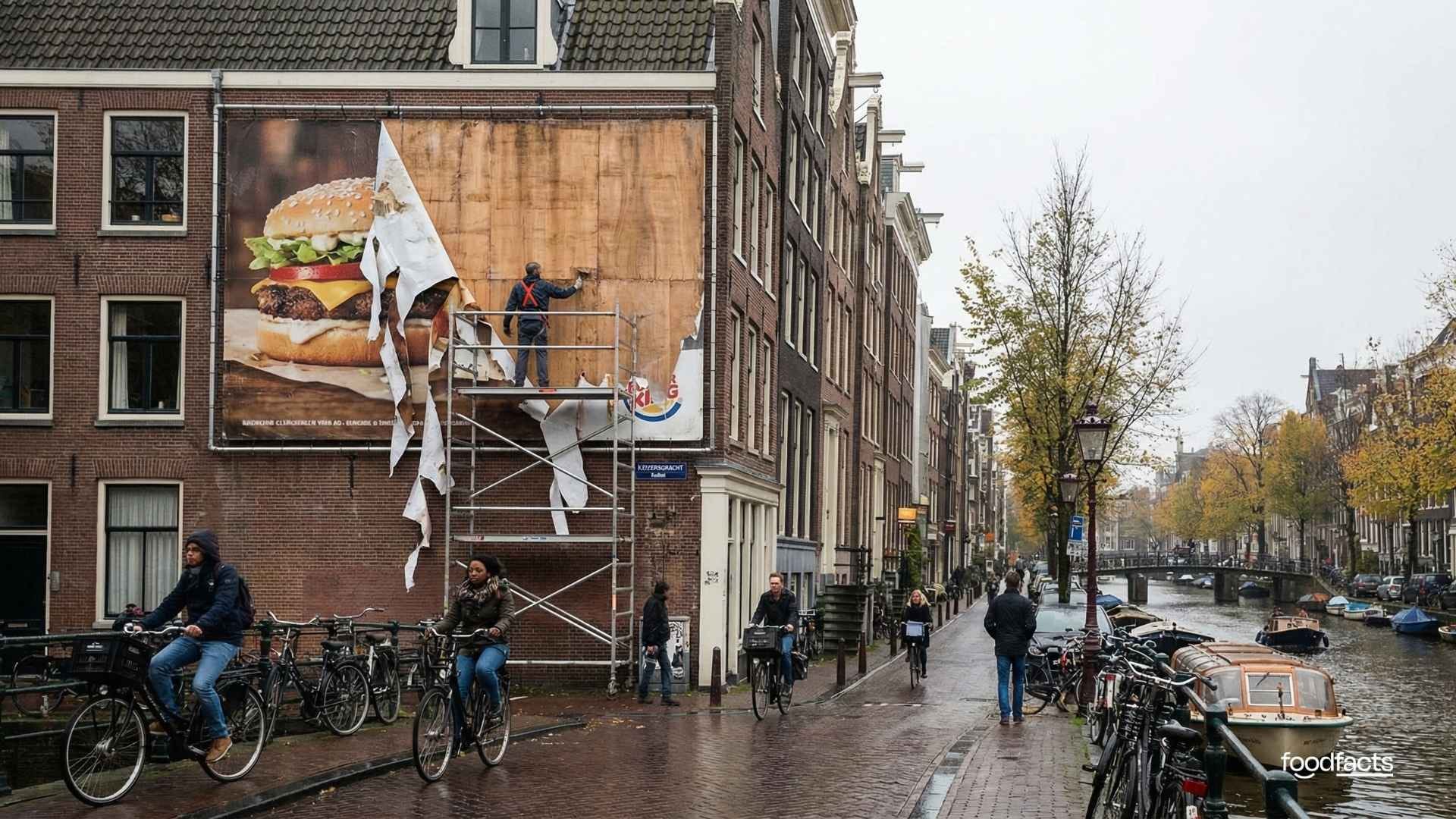
We got a reminder of that over the last couple of days with the news that Amsterdam has now become the first capital city in the world to ban all public advertisements for meat, as well as fossil-fuel products like cars and flights.
