


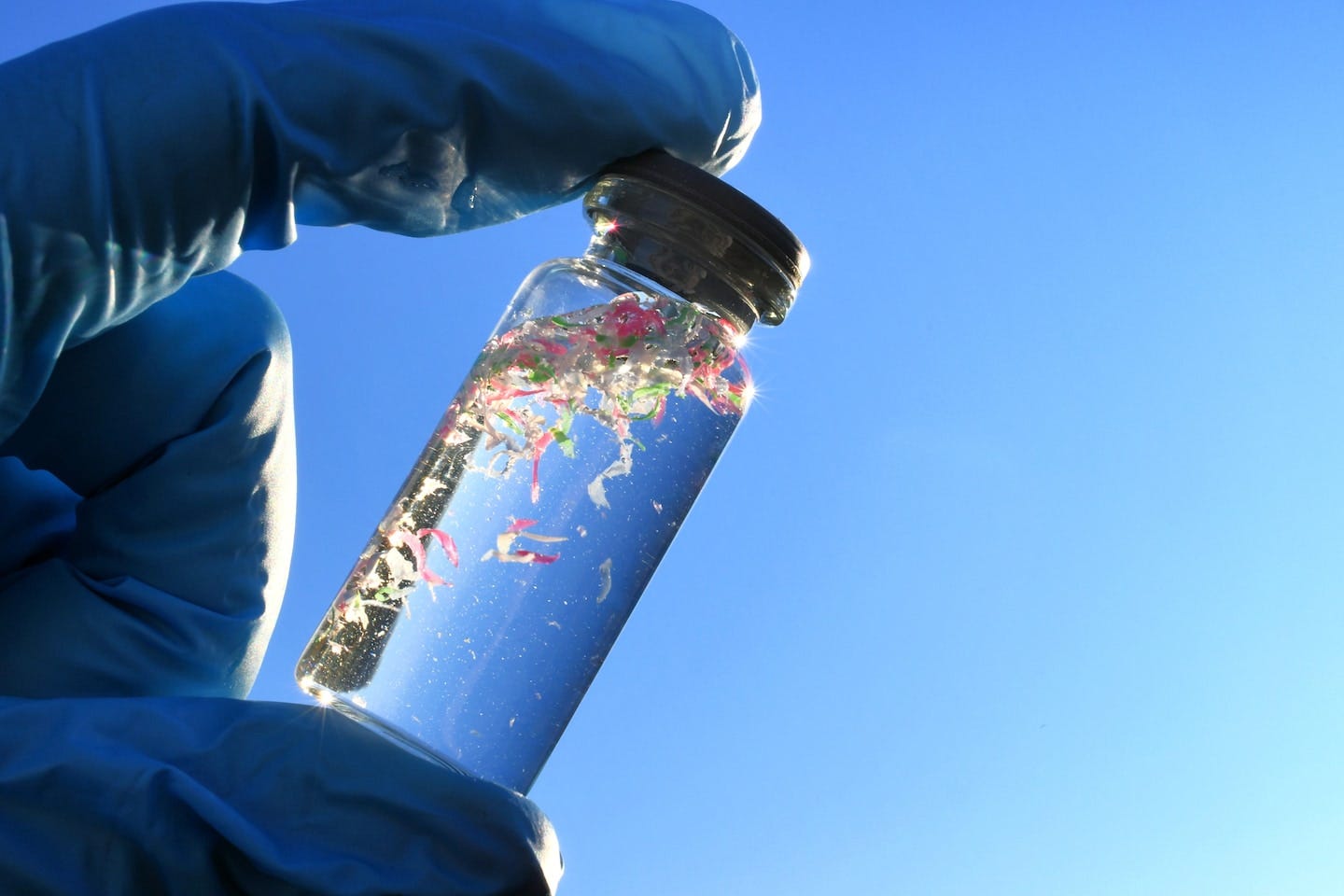
What if fifty years ago we had known the things we know today about plastic? What if we had known tiny pieces of plastic—microplastics and nanoplastics—could enter our bodies, travelling from the gut into the blood and then all the major organs, including the lungs, liver, muscle tissue and even the brain? What if we had known this process could be harmful, and might be implicated in every type of chronic disease there is, from diabetes to dementia?
If we had known those things, would our world still look the same—a world where plastic, produced in the hundreds of millions of tons each year, is essential, ubiquitous and inescapable? More than nine billion tons of plastic are estimated to have been produced since 1950, with over half that total in the last fifteen years. Global production is expected to double by 2050.
On Monday, The LA Times released a new report that shows executives in the plastic industry knew, as early as 1974, that microplastics could enter the bodies of living creatures, including humans, and end up being deposited in their organs.
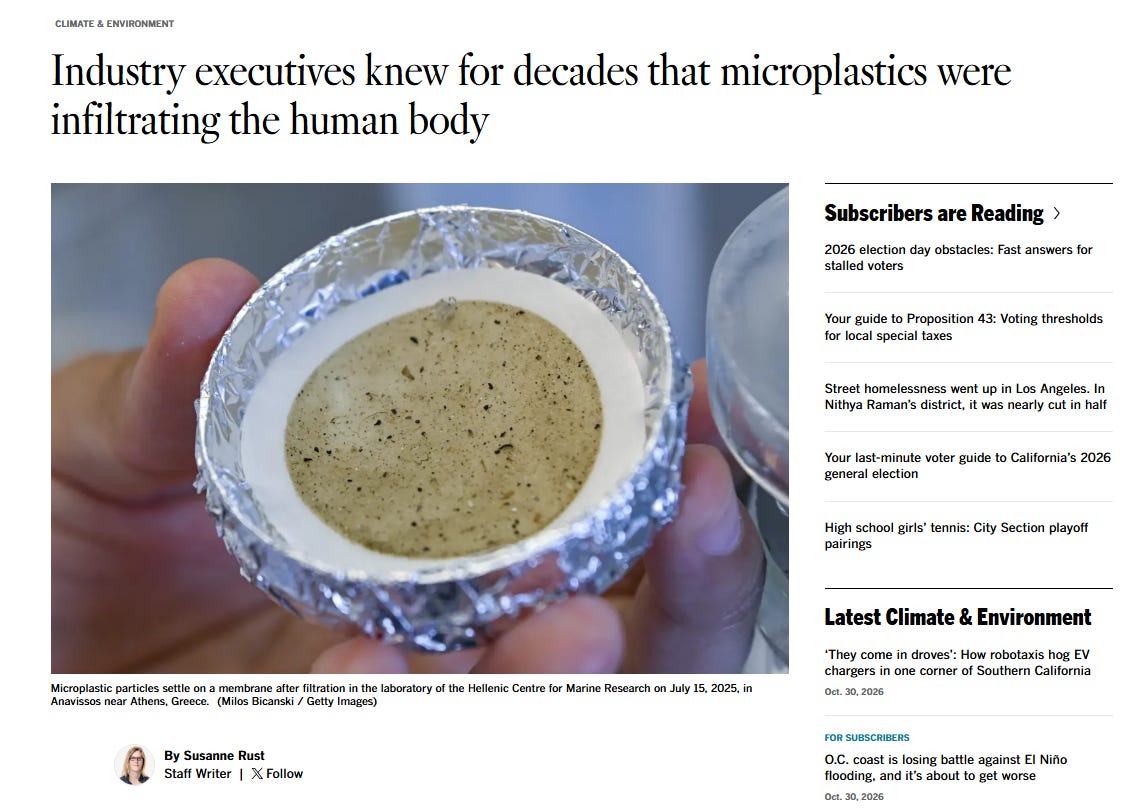
This revelation has the potential to upend more or less everything we know about the history of plastics, and in particular what we know about their harmful effects. The story we’ve believed up until Monday is that research into microplastics only really began within the last 20 or so years, and it’s taken until much more recently for awareness and evidence to grow. The term “microplastics” was coined in 2004, and the first real alarm was sounded in 2018, when researchers at the University of Vienna discovered microplastics in human feces. Since then we’ve learned the average person may swallow a credit card’s worth of plastic a week, microplastics are found in arterial plaques, and quantities in the brain may have increased by 50% in less than a decade, among other things.
Thanks to The LA Times, and to a trove of documents unearthed during litigation, we now know that executives from companies like Union Carbide were worried enough, 50 years ago, to describe the ingestion and retention of plastic in the body as a “horror story.” But it was a horror story they had good reason to believe was anything but fiction. And yet nothing, apparently, was done.
Or maybe worse, an inconvenient truth was suppressed in the name of profit. Today the industry is worth close to a trillion dollars annually.
