


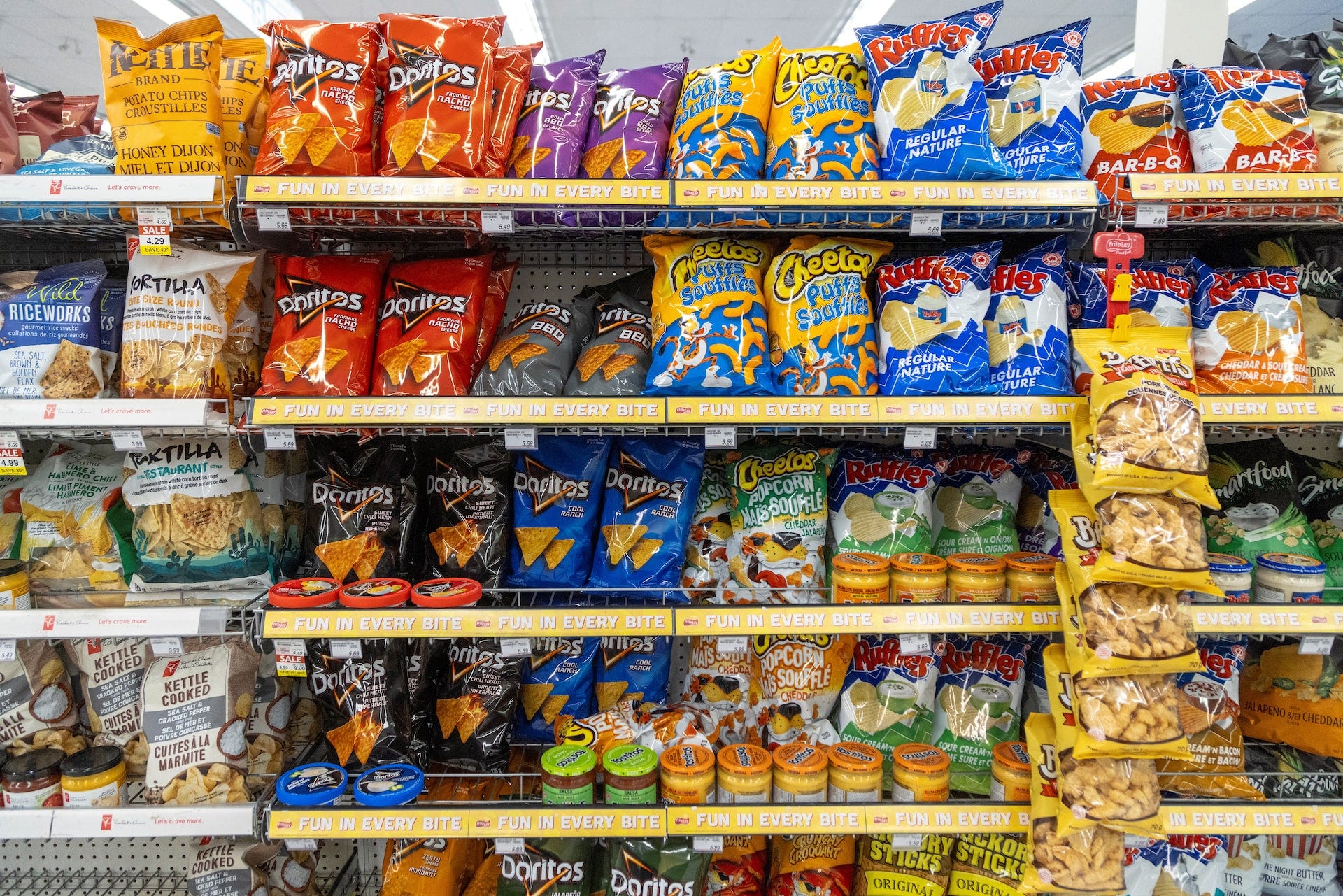
The food you put in your mouth can have a profound effect on your health—and not just your physical health, but your mental health too. Who would have thought?
I would have, for one, and I’m sure you would have too, but it seems the scientific community is only just starting to catch up with grandma’s time-honoured wisdom: You are what you eat.
There’s now a well-established link between consumption of ultraprocessed food—factory-made food that contains ingredients and additives you wouldn’t find in a normal kitchen—and poor mental health. Studies have shown that people who eat more of that plastic-wrapped crap tend to suffer from mental-health problems: depression, anxiety, brain fog and even developmental disorders like autism and ADHD. The more a person eats, the research tell us, the worse their symptoms get.
But one thing we haven’t had is an intervention study: a study where researchers alter the amount of ultraprocessed food people eat and see what happens to their mood.
The existing studies have all been population studies, which simply examine trends among segments of the general population and compare them. These establish correlations, often extremely robust ones, but they’re a less clear guide than studies that control and tweak variables with proper care and rigor. Studies that do that tell us much more reliably about causation.
In this case, does eating ultraprocessed food cause mental illness?
Now, thankfully, that gap in the research has been filled, and hopefully this new work will be a spur to further work and, more importantly, to meaningful policies that promote the consumption of real food as an alternative to reliance on drugs.
Researchers at the University of California, Santa Barbara took 20 adults with depression who ate a considerable amount of ultraprocessed food and put them on a diet that contained less. Each person ate their standard diet and then the less processed diet, so comparison would be possible not only between individuals but also in each individual case. In a small study this also helps isolate and control the variables, making it easier to draw meaningful conclusions.
The participants were aged between 18 and 80. All of them had a primary diagnosis of depression and ate a significant amount of ultraprocessed food, as determined by means of a special screening tool. Seventy percent were female, two-thirds were on at least one medication and, on average, the participants had lived with depression for 13 years when the study began, with most also suffering from anxiety.
The participants agreed not to change any other aspect of their lives apart from their diet: they took the same medications, continued attending therapy if they were, exercised the same amount and kept the same sleeping pattern as far as that was possible. This was all done to isolate the effect of the dietary intervention.
The effect was dramatic. On the standard depression scale, scores fell from a baseline of 21.6 to around 8 on the healthy diet. Symptoms of anxiety also decreased no less dramatically.
In fact, the effect was even more dramatic than users of anti-depressants typically experience. A large-scale meta-analysis published in the British Medical Journal, considering data from 242 studies of anti-depressant use dating all the way back to 1979, showed that just 15% of users derived a benefit they wouldn’t have derived from the placebo: the remaining 85% derived no benefit whatsoever. What’s more, those who should benefit the most from anti-depressants—those who have severe depression, comorbid anxiety and suicidal thoughts—actually benefit the least from their use. Most clinical trials of anti-depressants deliberately exclude these people for that reason, even though the drugs are marketed specifically for those groups.
Worse than that even—could there be anything worse than that?—is the fact we’re still no closer to proving the dominant theory of depression, decades after selective serotonin reuptake inhibitors (SSRIs) were approved for use on the basis of that theory. There isn’t actually a shred of real evidence that depression is caused by serotonin deficiency.
And yet when people are depressed it’s to anti-depressants that they turn—or, rather, are turned.
