Do Men Need Estrogen?
The short answer is...
Do men need estrogen? After all, it’s the female hormone, right?
The short answer is yes, men do need estrogen. What differs between male and female is not the type of hormone they need—testosterone for men, estrogen for women—but the specific ratios of both hormones they have in their body. Men have more testosterone than estrogen, and for women it’s the opposite.
What so bad about the modern world and the plethora of harmful chemicals we’re exposed to on a daily basis is that they upset this vital balance. Because of processed-food additives, herbicides, pesticides, microplastics, non-stick coatings, sunscreens and personal-care products, both men and women end up with too much estrogen.
But having too little estrogen—or even no estrogen—is just as harmful as having too much.
Nevertheless, because of the recent explosion of broscience on the internet and especially Twitter, lots of young men think they need to drain their bodies of estrogen if they want to be fit and healthy.
When I was doing a bit of online coaching on the side, during the pandemic, I had a client who’d got it into his head that it wasn’t enough simply to work out, fix his diet, sleep properly and reduce his exposure to harmful chemicals, thereby improving his natural levels of testosterone.
He needed to get rid of estrogen.
All of it.
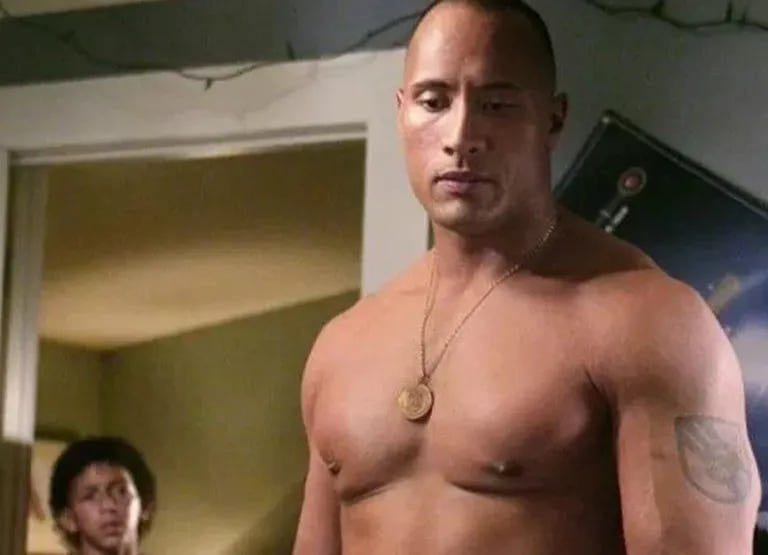
One thing he was fixated on was aromatase inhibitors. These are compounds like resveratrol—found in grape skins and wine, for example—that block the action of the enzyme aromatase. Aromatase, which is present in the testes, bone, fat and muscle tissue, and brain, converts excess testosterone into estrogen. Aromatase is the reason why bodybuilders who take steroids often get savage gynecomastia—man boobs. All the excess androgens in their system get converted into large amounts of estrogen, so on top of their huge carved pectorals they end up with fat puffy nipples. Go back and look at pictures of the Rock from the early days of his wrestling career and you’ll see exactly what I mean. Gross.
Anyway, it took a lot of work to convince this client that he didn’t need to buy aromatase inhibitors online, and that in fact they might even be harmful for his health.
A very useful summary of the importance of testosterone to male health is provided in a paper in the journal Endotext entitled, “Estrogens, Male Reproduction and Beyond.” Estrogen’s functions vary from ensuring proper bone health to managing libido and erections (yes, if your estrogen is low as a man, you’ll probably suffer from erectile dysfunction).
I won’t go into unnecessary detail about the biological pathways or mechanisms at work: you can read the paper if you’re interested in those.
Instead I’ll just provide a summary of the most important functions and what happens to men with low estrogen.
First, the summary.
Bone health and growth: Estrogen is critical for growth plate closure during puberty, acquisition of peak bone mass, and regulation of bone turnover and mineralization in adults.
Hormonal regulation: Estrogen provides negative feedback to control secretion of luteinising hormone (LH) and follicle-stimulating hormone (FSH) secretion.
Reproductive health and fertility: Estrogen helps regulate key aspects of spermatogenesis (sperm production) and sperm maturation. It also helps ensure the proper functioning of the tissues of the testes, including the epididymis.
Sexual function: Estrogen works in concert with testosterone to regulate libido, arousal and erectile function.
Metabolism and body composition: Estrogen influences insulin sensitivity, glucose management, the metabolism of lipids and the balance of fat and lean tissue.
Other functions: Estrogen modulates growth of the prostate gland and also plays roles in heart and brain health (these are less well understood at present).
On the basis of this list, you’d expect an estrogen deficiency to have wide-ranging effects, and that’s exactly what happens. Men with low estrogen, whether for congenital reasons or otherwise, might have fragile bones, reduced insulin sensitivity, and reduced fertility and libido, among other things.
There is an ultra-rate genetic form of low estrogen called aromatase deficiency, which causes an individual to be unable to produce aromatase because of mutations to the CYP19A1 gene. Males with the condition typically appear normal at birth, but as they grow older they begin to grow prodigiously, with long arms and long legs. They will often have an unusual fat distribution and a humped back. Below is a picture of a 27-year-old man with aromatase deficiency.
The conclusion of the Endotext paper is useful, so I’ll finish with that.
“Sex steroids account for sexual dimorphism because they are responsible for the establishment of primary and secondary sexual characteristics, which are under the control of androgens and estrogens in male and female, respectively. Advances in the understanding of the role of estrogens in animal and human models suggest a role for this sex steroid in the reproductive function of both sexes. The fact that both estrogen excess and estrogen deficiency influence male sexual development, testis function, the hypothalamic-pituitary-testis axis, spermatogenesis and ultimately male fertility, highlight the biological importance of estrogen action in males. Thus, estrogens, not only androgens, are responsible for some crucial physiological functions in men like fertility, reproduction, and bone health. In particular, the balance of serum estradiol to testosterone ratio is likely crucial for maintaining all these functions, thus suggesting that the homeostatic equilibrium between estrogens and androgens is important for the correct functioning of several physiological systems in men. From an evolutionary perspective, this relevance of estrogen actions in males provides an example of the parsimony operating in biological events that are crucial for the evolution of the human species such as growth and reproduction.”


