


“Don’t ever take a fence down until you know why it was put up.”
That’s a rather more concise way of expressing “Chesterton’s Fence”: a principle that urges us to exercise caution before we sweep away institutions, practices, buildings and structures without fully understanding why they came to exist in the first place.
The fence is a homely example, befitting the great fat man himself, but real-world instances have been devastating and tragic and anything but quaint.
Take China’s “Four Pests” campaign, begun under Chairman Mao in the late 1950s. In the name of maximising agricultural output, farmers were encouraged to massacre sparrows wherever they were found, since they eat grain. Less grain, lower yields—no Great Leap Forward. But when the sparrow population collapsed as intended, insects like locusts ravaged the crops. Famine ensued. Millions died.
The humble sparrow, it turned out, played an important role in keeping insects and other pests in check, a role that more than balanced the annoyance of a bit of lost grain.
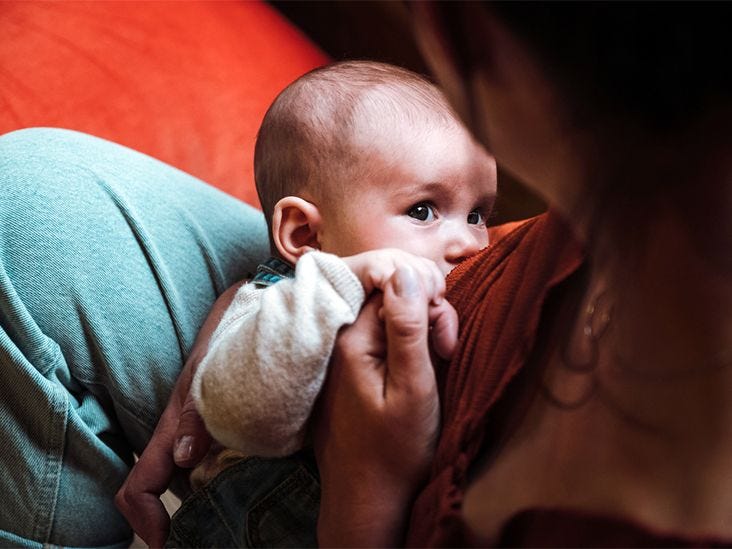
These days, if I reach for an example to illustrate Chesterton’s fence, I might reach not for Chairman Mao and his little birds but for breastfeeding. Breastmilk is the natural food for babies and infants, a food perfectly suited to a young child’s nutritional needs, and what’s more, it’s free. Mothers produce as much as is needed, for as long as needed. Yes, a very small minority of women have trouble producing breastmilk, and some children, including the author, have trouble latching on, for one reason or another; but these are problems that can easily be remedied with breast-milk exchanges and bottlefeeding. In short, there’s no good reason why every child shouldn’t be fed with breastmilk.
That didn’t stop corporate food makers from selling mothers a product—baby formula—that they didn’t and don’t need. For decades, formula has been sold as a safe, healthy alternative to breastmIlk right from the get-go, as soon as baby is born. In fact, it’s often been marketed as a superior choice to breastfeeding, not just for baby’s health, but also for mum too—especially if she’s a busy professional who’s short on patience and time.
Today, about 15% of American babies are never breastfed, and the majority—around 70%—have their feed supplemented with formula during the first six months. Generally, rates of formula use are highest in the Developed World, but the Developing World is catching up fast. Global formula sales have more than doubled since the year 2000.
Over the same period, more and more research has revealed exactly what formula-fed children miss out on. We know that breastfed children tend to have higher IQs and significantly lower incidence of allergic conditions than children who go without. Breastmilk supplies nutritional compounds, including vital immune factors and sugars that encourage the growth of healthy bacterial strains in the gut, that no shop-bought formula can replicate; although smart-Alecs are now trying to create “lab-grown breastmilk” in bioreactors, an endeavour that will also fail.
In truth though, there are still plenty of things we don’t understand—or are only beginning to understand—about breastfeeding and its importance to children’s development.
A new study shows that breastfeeding may have help infants develop self-control, by giving them regular training in recognising when they’re full. This training translates to other impulses and behaviour—to what researchers call “executive function”—and may have long-term ramifications, including reduced likelihood of overeating and obesity.
Researchers have known for some time that early childhood is a key period in habit-formation and the development of self-regulation. Until now, the role of breastfeeding in those processes had been unclear.
It was hypothesised that breastfeeding might play a role in the emergence of self-control, because babies take the lead. When bottlefeeding, mothers have a visual guide to how much has been consumed—the amount of liquid in the bottle—and may encourage their babies to finish the contents even when they’re full. Bottlefed babies may consistently be trained to overeat. By contrast, when mothers breastfeed, there is no visual guide. They must wait until their babies choose to stop.
