


Six years on, we still struggle to answer basic questions about the COVID-19 pandemic—questions like, was it a natural “spillover” from the Wuhan wet market, as the Chinese Communist Party maintains, or was it the product of lab research that somehow broke containment?
Both scenarios beg yet further questions, questions that center on the how.
Take the second scenario. How did laboratory samples of a rare bat coronavirus end up infecting people outside the laboratory where they were being worked on? What was the exact mode of transmission? When did it happen?
In recent weeks, in the ongoing quest for answers, our attention has been focused on Anthony Fauci, the man who coordinated the pandemic response in the US and who appears to have been responsible for funding and coordinating gain-of-function research into rare coronaviruses at the Wuhan Institute of Virology.
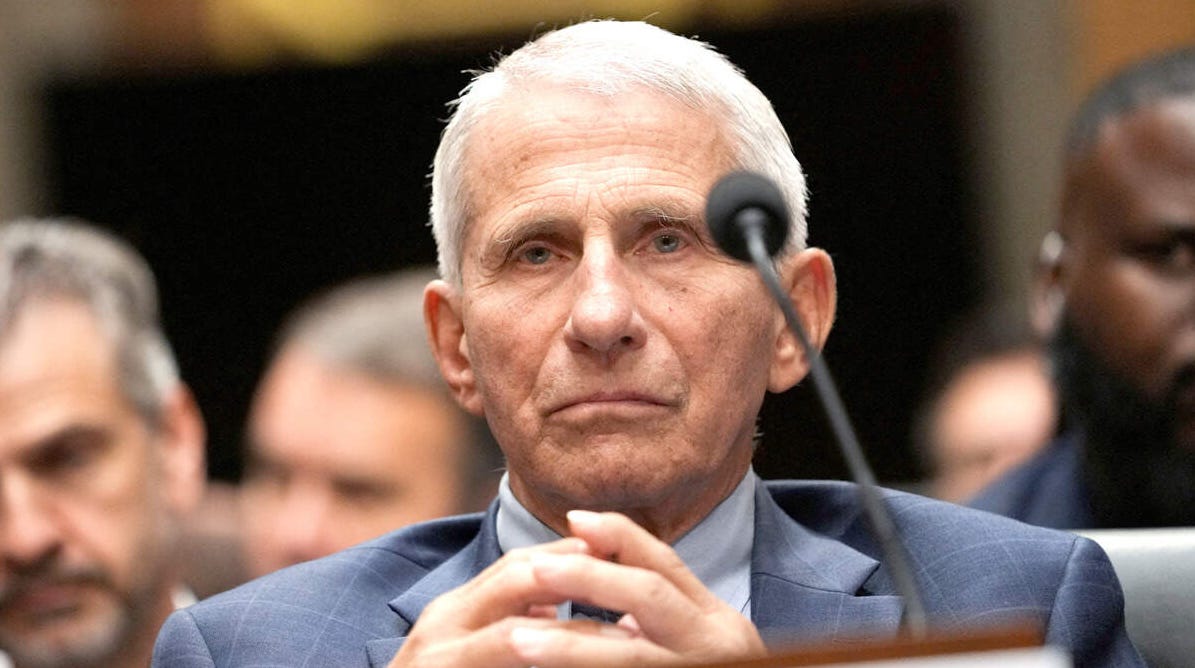
At the end of July, Fauci made a remarkable appearance before the Senate Homeland Security and Governmental Affairs Committee. He remained silent except to invoke the Fifth Amendment over 100 times. Material from Fauci’s work computer was also released by Senator Rand Paul, who chaired the Committee. It showed Fauci expressing early skepticism about the wet-market theory, contradicting his public statements and ultimate endorsement of that theory.
For his refusal to testify before the Committee, Fauci may now be referred to the Department of Justice, since his preemptive pardon from President Biden removed the possibility of self-incrimination the Fifth Amendment exists to safeguard against.
Overshadowed, understandably, by these dramatic events was an investigation from The New Atlantis into biosecurity failures that took place in Wuhan on the eve of the outbreak.
The investigation still isn’t enough to prove the virus originated in a laboratory in Wuhan, but it does provide valuable context that has been missed so far. It gives us some idea of the how. Dan Silver, who led the New Atlantis investigation, presented much of the evidence to the World Health Organization (WHO) when it made its own official investigation into the origins of the pandemic, in 2021. Although investigators from the WHO acknowledged Silver’s contribution, their official report made no mention of worrying lapses in safety protocols around the handling and disposal of potentially infectious biological waste in Wuhan, in the spring and summer of 2019, just months before COVID-19 was circulating among the general population, as we now know.
As early as May of that year, the system for disposing of hazardous biological waste in the city of Wuhan began to break down. At that time, only three companies in the whole of Hubei province, where Wuhan is located, were licensed to collect and dispose of the waste produced by the Wuhan Institute of Virology. In a period of just over a week in mid-May 2019, two of those companies, including the Institute’s official contractor, suffered devastating fires at their premises, knocking them out of action.
This left the Institute reliant on a new contractor located nearly 200 miles from the city. Routines for waste disposal would have changed significantly, requiring “improvisation” from both parties.
“If that improvisation occurred without a corresponding reduction in research activity,” Silver writes, “the period represents an expanded window of risk in which the margin for error or mishap was thinner than usual.”
In short, hazardous waste was more likely to have been disposed of incorrectly, with all that potentially entails.
There’s more. While the local system for waste-disposal was coming under unusual strain, other publicly available documents show that the Wuhan Centers for Disease Control and Prevention had accumulated nearly two metric tons of hazardous waste over a period of 25 years, in contravention of strict regulations that prohibit waste from being kept for more than a year. A procurement document from June 2019 shows the Wuhan CDC acknowledged there were “hidden safety concerns” about this mountain of waste, but the nature of those concerns isn’t stated. The contract to dispose of the mess went to the only available company in the province—the one that was 200 miles from the city.
